
I
am reading Now is the time for running which is about a boy named Deo and his
brother innocent. Their village is in Gutu Zimbabwe where they had barely had
any food and was extremely poor. However, this situation is still occurring
sadly. Nearly everyone is unemployed and their economic situation is
plummeting. I couldn't imagine being in Deo and his brother’s shoes I am not
sure exactly how I would handle that situation but I probably would handle it
as well as Deo. Even now it must be extremely hard to live in such
conditions. How would you deal with living in such a harsh and poor way?
Popular Posts
-
People in ancient Greece believed that Gods (The Olympians) exist. I personally think that gods do not exist. But if you see some comic b...
-
After taking the five second tours of ten different locations in South Asia, the last certainly caught my eye the quickest; a staggeri...
-
By now you probably heard of The Hammurabi Code and everyone has a different opinion on the subject of whether its fair or not. Well ...
-
I think the things we're learning about are interesting. The things i was mostly interested in was how early writing...
-
If I could visit a place in Asia it would be Bali, Indonesia. This place is a really good place to do a lot of hiking and backpackin...
Tuesday, May 13, 2014

Sweatshop Shoppers
For a BBC show they took a hand full of people who shop for clothes often. They agreed to join a factory in Mumbai where some of their clothes were made to see how poor the life was to make their clothes. One of the shoppers, named Georgia (20 years old), was disappointed. While the factory was technically not a sweatshop and all the workers were adults, the conditions were the same. The room was hot, the salaries were low and you had to sleep at your desk. A line of 30 workers had to complete a total of 300 garments a day! Believe it or not, the worst part of the factory was the money you got. You got about 2 euros for a normal job, but it can go down to 1.50 euros as well. This money was just enough for food and clothes for the worker's family. Georgia thought the first thing she should get was toiletries, the cheapest thing was deodorant, but she couldn't afford it with her salary.
This story is similar the Boys Without Names. In this book; the main character tries to get a job. The boy who he thought was helping him, drugged him and sold him! Now he is in a factory/sweatshop like this. In the book, Gopal (the main character) has to make about 12 frames a day, 4 before lunch, 4 before dinner, and 4 after dinner. Though, unlike the BBC story, Gopal can't leave, he eats and sleeps there. Gopal doesn't get paid either. If I was Gopal I would have brought Aai (mother) the the tea stand where Gopal got drugged. That way Aai could have been there and the other kid wouldn't drug me. There fore I wouldn't be sold. As well I would always bring Aai or at least Jama (his uncle) because they are in Mumbai, which I picture as a bigger version of New York City. So what do you think of these "sweatshops"? Do you think we should take them down or keep them, but raise the conditions?

This story is similar the Boys Without Names. In this book; the main character tries to get a job. The boy who he thought was helping him, drugged him and sold him! Now he is in a factory/sweatshop like this. In the book, Gopal (the main character) has to make about 12 frames a day, 4 before lunch, 4 before dinner, and 4 after dinner. Though, unlike the BBC story, Gopal can't leave, he eats and sleeps there. Gopal doesn't get paid either. If I was Gopal I would have brought Aai (mother) the the tea stand where Gopal got drugged. That way Aai could have been there and the other kid wouldn't drug me. There fore I wouldn't be sold. As well I would always bring Aai or at least Jama (his uncle) because they are in Mumbai, which I picture as a bigger version of New York City. So what do you think of these "sweatshops"? Do you think we should take them down or keep them, but raise the conditions?
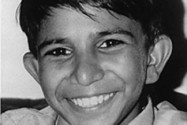
Iqbal Masih
Sudan News
Currently in Sudan there is still much bad going on. People are still poor, still starving, and still dying. Although, Sudan has been improving quite a lot even though they're in war right now. I think Sudan will only keep improving as the economy gets better and people start finding jobs over there. Even though people are fighting and dying, Sudan will make a comeback in the future. Sudan is still searching for water, food, money, and jobs. With the right changes Sudan can overcome most of these problems. What do you think Sudan will be like in the future?
Sweatshops in modern times
That shirt you’re wearing where did it come from? No i do
not mean what store you bought it at, i mean where did the shirt come from?
There is about an 80% chance that that shirt you are wearing was produced at a
sweatshop. What is a sweatshop? Well according to the dictionary Sweatshop
definition a sweatshop is a shop employing workers at low wages, for long
hours, and under poor conditions... This sounds bad right? The conditions of
these sweatshops are horrid. 22 million innocent children die each year due to
poor conditions at sweatshops. That is more than the population of New York!
The government of the countries that
these sweatshops are in are trying to
stop these factories by passing law that give an age limit to the people who
work there, setting a minimum wage, and setting a maximum number of hours people could work. However
they still break these rules and get away with it. In the book i am reading The Boys Without Names, Gopal an 11 year
old boy is forced to work in one of these sweatshops. Reading this book you
feel so much emotion towards this. Maybe a little boy named Gopal never existed
but many kids with the same stories are trapped in these dirty and scary place.
Not knowing if they will have enough food or if they will ever get out of these
places all these kids have is a hope. How do you think we can end this?

School or No School, that is The Question
The
schools in Africa are new in the villages in the more sheltered parts of the
region. Many people think it may be bad to introduce schools to the nomads, because they think there religion may fade to nothing at
all. They want the kids to do the normal jobs they did when they were kids, but
now they cannot because they go to school now. The good thing is
that the kids may have a better future, to become doctors, vets, or even a
teacher them self’s. They could use the knowledge they learned to help with
daily life to become more “Civilized”. What do you think about the schools in
Africa? How would they help and how would they do no good?
Sweatshops In Mumbai, India
India still has lots of children in child labor, especially in big cities like Mumbai where Gopal in Boys Without Names is working in a sweatshop. The children in India that suffer from Child Labor usually don't get paid but they get bad food which they are forced to eat. Some people think the cause of child labor is the increasing gap between the rich and the poor. 30,000 kids work for 11 dollars per month in Mumbai. The last thing India has done to stop child labor is ban kids from If working at homes or restaurants, which was active since 2006. If I was Gopal in this situation I would be dead or I would of escaped already. If you were in Gopal's shoes what would you do?
Subscribe to:
Posts (Atom)